
When your spine is affecting your life, the first step is understanding why.
Back pain, neck pain, numbness, weakness or difficulty walking can have many causes. Some spine problems improve with medicines, physiotherapy and lifestyle changes, while others need specialist evaluation and carefully selected surgery.
Surgery should have a clear reason, a clear objective and a treatment plan tailored to the individual patient.

Clear diagnosis first
Dr. Narula evaluates spine symptoms through history, examination and imaging before discussing whether surgery is needed.
Understanding spine problems before deciding treatment.
Not every spine problem requires surgery. A scan can show changes, but the treatment decision depends on whether those changes explain the patient's symptoms and neurological findings.
When is spine surgery considered?
A nerve or the spinal cord is significantly compressed
Symptoms continue despite appropriate non-surgical treatment
Weakness or neurological impairment is progressing
A structural problem needs correction
A spinal tumor requires surgical management
Instability or structural compromise is present
A spinal injury needs neurosurgical intervention
The expected benefit outweighs the known surgical risk
A scan alone does not decide surgery. Symptoms, neurological function, clinical urgency and the patient's overall situation must be reviewed together.
Spine conditions that may require surgery
Herniated Disc
Disc material may press on a nerve and cause radiating pain, numbness or weakness. Many cases improve without surgery, but selected patients may need decompression.
Spinal Stenosis
Narrowing around the spinal canal can affect walking, balance and nerve function. Treatment depends on symptoms, examination and imaging.
Spinal Cord Compression
Compression of the spinal cord can cause weakness, gait changes, coordination problems or serious neurological symptoms that need timely evaluation.
Spine Tumors
Tumors in or around the spine require careful planning around the spinal cord, nerves, stability and the need for additional treatment.
Learn moreDegenerative Spine Conditions
Age-related disc, joint and bone changes may need treatment when they cause persistent pain, nerve compression or loss of function.
Spinal Injuries
Trauma-related spine problems are assessed for stability, nerve function, spinal cord safety and the urgency of intervention.
The brain, spine and nerves are one connected system.
The spine protects the pathways that connect the brain with the body. A neurosurgical spine assessment therefore looks beyond the pain location and studies nerve function, spinal cord safety, walking, balance and warning symptoms.
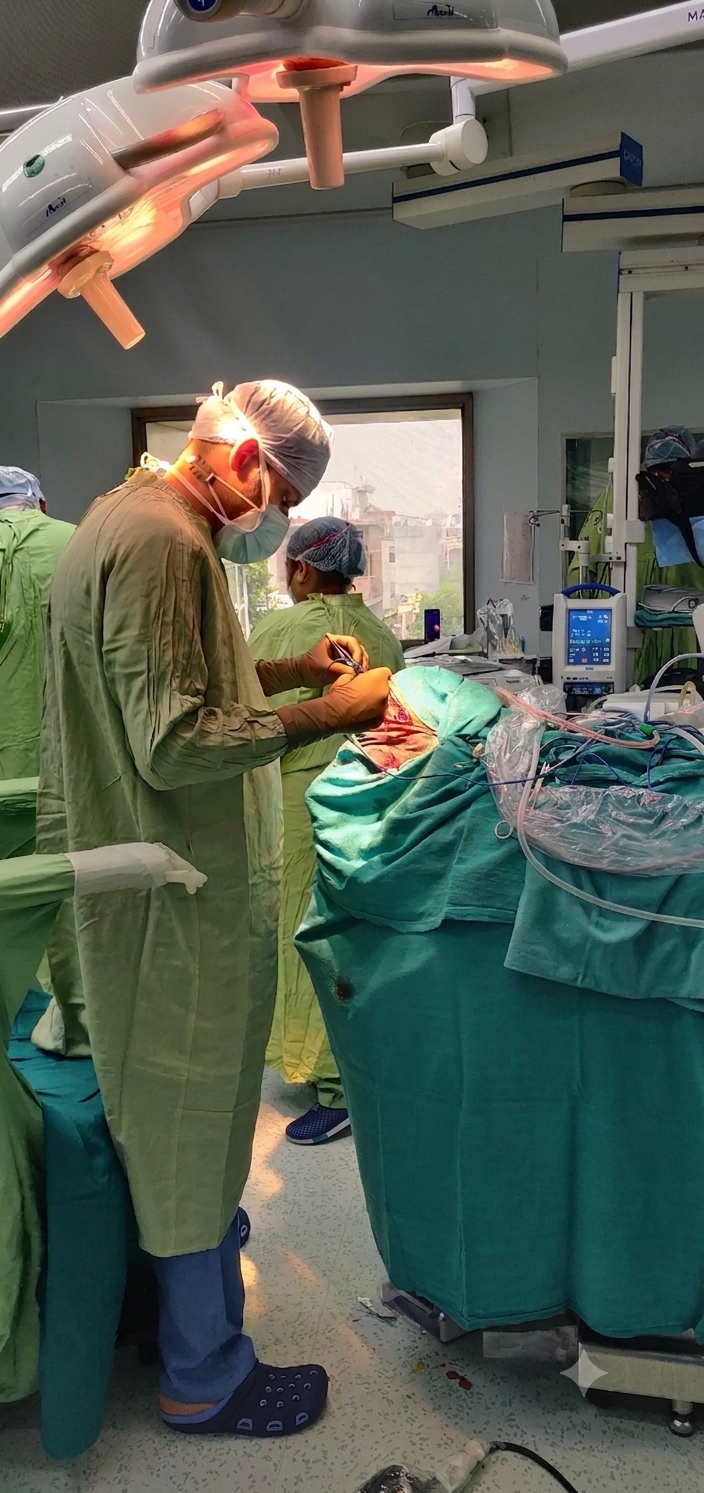
Smaller access is valuable only when it is the right access.
Minimally invasive spine surgery may use smaller access, specialized instruments, microscopes, endoscopes or image guidance for selected conditions. It is not risk-free and is not automatically the best choice for every patient.
How Dr. Narula evaluates a spine condition
Symptoms
Pain pattern, weakness, numbness, walking ability and bladder or bowel changes are understood first.
Neurological Function
Power, sensation, reflexes, coordination and gait are examined to understand nerve or cord involvement.
Medical History
Previous treatment, other illnesses, medicines and activity needs are included in planning.
Imaging
MRI, CT or X-ray findings are matched with symptoms and examination rather than read in isolation.
Treatment Options
Non-surgical care, injections, observation, minimally invasive options or conventional surgery are discussed when relevant.
Decision
A treatment plan is chosen only after the reason, objective, risks and recovery expectations are clear.
What happens during a spine consultation?
Already advised spine surgery?
A second opinion can help you understand the reason for surgery, whether it is urgent and what alternatives or risks apply to your case.
Spine surgery guided by clear principles
Accurate Diagnosis
Understand the condition before choosing the treatment.
Appropriate Treatment
Surgery is considered only when it has a clear purpose.
Surgical Precision
Planning focuses on nerves, spinal cord safety and recovery.
Clear Communication
Patients should know the reason, risk and expected path ahead.
Continuity of Care
Follow-up and rehabilitation are part of the treatment journey.
Risks discussed clearly
Recovery is planned
Seek urgent care

Neurosurgeon | Spine Surgeon | MCh Neurosurgery
Dr. Dipanshu Narula evaluates brain, spine and nerve conditions with a focus on appropriate diagnosis, patient-specific treatment planning and minimally invasive neurosurgical procedures where clinically suitable.
Spine surgery FAQs
Does every slipped disc require surgery?
No. Many slipped discs are managed without surgery. Surgery is usually discussed when symptoms are severe, persistent or associated with neurological problems.
Is spinal stenosis always treated with surgery?
No. Treatment depends on symptom severity, walking difficulty, neurological findings, imaging and response to non-surgical care.
Is minimally invasive spine surgery suitable for everyone?
No. It may help selected patients, but conventional surgery may be safer or more appropriate in some conditions.
How do I know whether I need spine surgery?
A proper assessment is needed. The scan alone does not decide surgery; symptoms, neurological function, medical history and imaging must be reviewed together.
Can I get a second opinion if spine surgery has been advised?
Yes. A second opinion can help clarify the reason for surgery, alternatives, risks, urgency and expected recovery.
Should I bring my MRI or CT reports?
Yes. Bring previous MRI, CT, X-ray reports, prescriptions and treatment records so the consultation can be more complete.
Your spine. Your questions. Your decision.
If spine symptoms are affecting your movement, sleep, work or confidence, begin with a clear neurosurgical assessment before making a treatment decision.
Bring your reports. Leave with clarity.
For brain, spine and nerve concerns, connect through a phone call or visit the clinic with MRI/CT reports and previous prescriptions.
+91 97723 48065
C-6, C Block, Sector 34, Noida